

Beryllium Copper Alloy
One of the highest strength copper based alloys available on the market today is beryllium copper, also known as spring copper or beryllium bronze. The commercial grades of beryllium copper contain 0.4 to 2.0 percent beryllium. The small ratio of beryllium to copper creates a family of high copper alloys with strength as high as alloy steel. The first of the two families, C17200 and C17300, includes high strength with moderate conductivity, while the second family, C17500 and C17510, offers high conductivity with moderate strength. The principal characteristics of these alloys are their excellent response to precipitation-hardening treatments, excellent thermal conductivity, and resistance to stress relaxation.



Applications of Beryllium Copper
Beryllium copper and its variety of alloys are utilized in very specific and often tailor-made applications such as oilfield tools, aerospace landing gears, robotic welding, and mold making applications. Additional non-magnetic properties make it ideal for down-hole wire line tools. These specific applications are the reason this copper is known as spring copper and other various names.
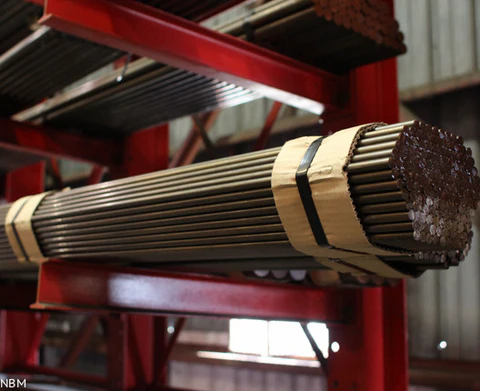
Beryllium Copper is available in a number of popular metal shapes including copper sheets, bars, extrusions, forgings, plates, rods, strips, tubes, wires, and pipes.
Browse our products or contact a sales rep for assistance.
Key Features of Beryllium Copper Alloys
Beryllium copper is chosen across many industries and applications for its impressive properties including:
-
High Strength
-
Moderate Conductivity
-
Excellent Thermal Conductivity
-
Resistance to Stress Relaxation
-
Excellent Response to Precipitation-Hardening
-
Hardness Similar to Steel
-
Corrosion Resistance
-
Non-Magnetic Nature
-
Non-Sparking
-
High Fatigue Strength
Common Beryllium Copper Questions
1. How does the corrosion resistance of beryllium copper compare to steel?
Beryllium copper exhibits superior corrosion resistance compared to the steels typically used for springs and other sensitive components, particularly in marine environments. Beryllium copper has better corrosion resistance than stainless steel in seawater. It is resistant to chloride-induced stress corrosion cracking and hydrogen embrittlement. It is important to note, however, that beryllium copper should not be used in contact with sulfur compounds or acetylene.
2. What does "precipitation-hardenable" mean for manufacturing parts?
Precipitation hardening, also known as age hardening, is a heat treatment process that is key to the versatility of beryllium copper. It allows the material to be worked and formed into intricate or complex shapes while it is in a soft, ductile state. After forming, the part can be heat-treated at a low temperature to significantly increase its strength and hardness to levels unsurpassed by any other copper alloy. This two-stage process provides a forming advantage not available in other high-strength alloys.
3. Are there unique applications for beryllium copper due to its non-sparking property?
Yes, a significant advantage of beryllium copper is that it is non-sparking and non-magnetic. This makes it an ideal material for producing hand tools such as wrenches, screwdrivers, and hammers intended for use in hazardous and potentially explosive environments. These tools are critical in industries like oil and gas, coal mining, and chemical processing, where a single spark from a conventional steel tool could lead to a catastrophic event.

Our Services
Aviva Metals creates special machined parts that can be shipped on a global basis and in full accordance with most international standards.
view all SERVICES